
Leather Care & Guides
How to Get Ink Out of a Leather Jacket – 3 Methods That Actually Work
Jul
Found Ink Stains on Your Leather Jacket? Move Quickly, but Don’t Panic!
When it comes to stains, very few are as frightening as spotting ink stains on your leather jacket. From a leaky pen in your pocket to a brush of a marker against the sleeve, your immediate impulse might be to rub the ink away before it sets. However, rubbing only allows the ink to penetrate further into the leather surface.
The good thing is that many fresh ink stains can be effectively reduced—sometimes even completely removed—if treated with the appropriate method. Rather than relying on harsh chemicals, successful ink removal comes down to acting quickly, using the right products, and avoiding excessive scrubbing that could damage the leather finish.
Here’s how to remove ink stains from a leather jacket using three effective techniques, which home remedies you should avoid, and when it’s best to seek professional help to protect your investment.
First Step – Does Your Stain Have Dried or Fresh Ink?
Before choosing a stain removal method, determine whether you’re dealing with fresh or dried ink. The two behave differently, and identifying the type will help you use the safest and most effective cleaning technique.
Fresh Ink
Fresh ink remains closer to the leather’s surface, making it much easier to remove. If the stain hasn’t dried yet, never rub it with a cloth or tissue because doing so pushes the pigment deeper into the leather. Instead, gently blot away any excess ink using a clean microfiber cloth.
Dried Ink
Once ink dries, its pigments bond with the leather’s protective finish. While you may be able to lighten the stain, completely removing it becomes much more difficult without professional treatment. Always proceed carefully using leather-safe cleaning methods.
Method 1 – Contain the Ink Before Removing It
Before attempting to remove the stain, focus first on preventing the ink from spreading. Any wiping or scrubbing increases the likelihood of pushing the pigment deeper into the surrounding leather.
Using a clean, dry microfiber cloth, gently blot the stained area. If excess ink is sitting on the surface, lift it carefully without dragging the cloth across the leather. Rotate to a clean section of the cloth frequently so you don’t transfer ink back onto the jacket.
Once you’ve removed as much surface ink as possible, stop rubbing. Applying additional pressure won’t remove the stain—it will only drive the ink deeper into the leather or damage the finish through friction.
Method 2 – Remove the Ink Stain Using a Leather-Friendly Cleaner
After containing the ink, the next step is removing the remaining stain. Use only a pH-balanced leather cleaner designed specifically for finished leather. Household cleaning products may permanently damage the leather without effectively removing the ink.
Apply a small amount of leather cleaner to a microfiber cloth—never directly onto the jacket. Begin cleaning around the outside edge of the stain and gradually work toward the center using gentle dabbing motions. This technique helps prevent the ink from spreading into clean areas.
Allow the cleaner to work for a few minutes between applications. If the stain begins to fade, continue using the same gentle process rather than increasing pressure.
Replace the section of the microfiber cloth whenever it starts absorbing ink to avoid transferring pigment back onto the leather.
Method 3 – Isopropyl Alcohol, When All Else Fails
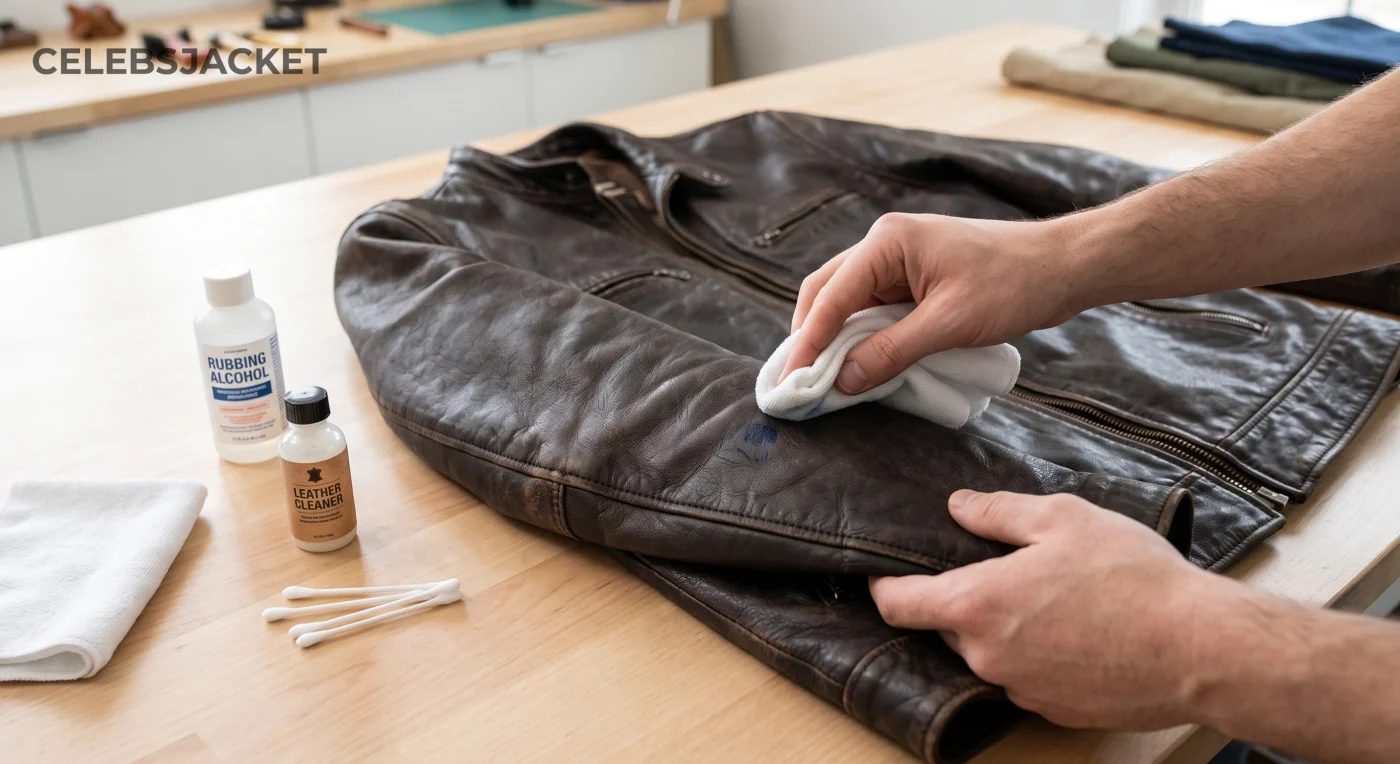
If a leather cleaner doesn’t fully remove the stain, isopropyl alcohol (commonly known as rubbing alcohol) may help dissolve the remaining pigment. However, it should always be treated as the final DIY option rather than your first choice.
Before applying alcohol to the visible area, perform a spot test on an inconspicuous section of the jacket, such as inside the hem or underneath the collar. Allow it to dry completely and check for any changes in color, texture, or finish.
If the leather shows no adverse reaction, lightly moisten a cotton swab with isopropyl alcohol and dab only the stained area. Replace the swab as soon as it picks up ink to avoid spreading the stain further. Once the stain begins lifting, wipe the area with a slightly damp microfiber cloth and allow the leather to air dry naturally.
Finish by applying a quality leather conditioner to restore moisture since alcohol can leave leather feeling dry.
Facts About Leather Maintenance and Ink Stain Removal
Many online stain-removal tips sound convincing, but not all are safe for leather. Understanding the difference between myths and proven methods can prevent permanent damage.
Myth: “Apply hairspray to remove ink from leather.”
Fact: Older hairsprays often contained high levels of alcohol, which is why this trick became popular. Modern formulas vary widely, making them unpredictable and potentially harmful. Leather-specific cleaners remain the safest option.
Myth: “The harder you rub, the better.”
Fact: Vigorous rubbing spreads ink instead of removing it. Gentle dabbing is significantly more effective and much safer for the leather finish.
Myth: “Household cleaners work just as well as leather cleaners.”
Fact: Household cleaners aren’t formulated for leather. They may strip away protective coatings, alter color, and leave the leather dry, brittle, or permanently damaged.
Myth: “If a cleaner works once, using it repeatedly will completely remove the stain.”
Fact: More isn’t always better. Repeated use of strong cleaning products can damage leather faster than they remove stubborn stains.
When It’s Time to Hire Professional Cleaning Services
Some ink stains simply cannot be removed safely at home. If the stain has been left untreated for a long period, covers a large portion of the jacket, or has already been subjected to multiple cleaning attempts, further DIY treatment may cause more harm than good.
Professional leather cleaners use specialized products and techniques that safely remove difficult stains while preserving the jacket’s color, finish, and natural softness. This is especially important for expensive, vintage, or sentimental leather jackets.
Stop home cleaning if:
- The leather begins becoming lighter in color.
- The surface feels dry, rough, or stiff.
- The ink stain shows no improvement after proper cleaning.
- The stain starts spreading during the cleaning process.
Sometimes preserving the leather is far more important than completely removing the stain.
Conclusion
An ink stain doesn’t mean your men’s leather jacket is ruined. It simply means you need to act quickly while choosing cleaning methods that protect the leather instead of damaging it.
Always let the stain—not panic—guide your actions. Start with the gentlest cleaning method, evaluate your results patiently, and recognize when professional care is the smartest option. Patience almost always produces better results than aggressive cleaning.
Of course, this guide focuses specifically on ink stains. If you’d like to learn how to properly maintain your leather jacket for years to come, be sure to read our complete guide: How to Clean a Leather Jacket at Home – The Complete Step-by-Step Guide.
