
Guides
The Complete Guide to Jacket Materials: Leather, Suede, Cotton, Wool, Fleece, and Nylon Compared
Sep
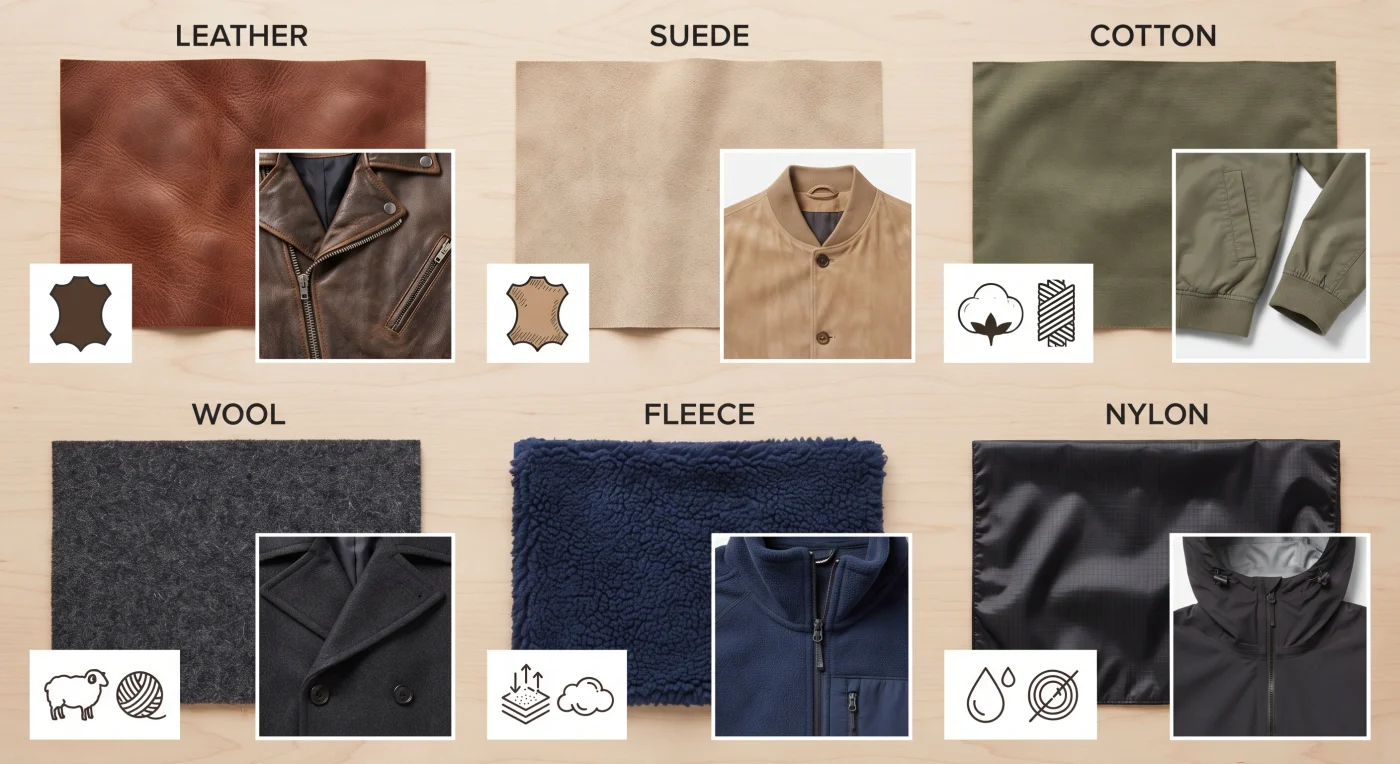
Each jacket material serves a different purpose. Leather ages gracefully but is expensive. Cotton breathes easily but provides no wind resistance. Here is an overview of the six essential jacket materials at one place. You will discover how each one works when it comes to warmth, comfort, and durability. You will even have access to guides about each material. Use this guide to get started with any kind of jacket choice. Each material listed below is made to suit a particular climate and lifestyle.
Quick Answer: How to Choose a Jacket Material
Go for leather if you want something stylish and durable in the long run. Go for cotton when you require something that is comfortable to wear because of its breathability and lightness. Go for wool for the insulation it offers and the classic feel that it provides. Go for fleece if you need something that provides warmth and is inexpensive as well. Go for nylon when you need to be wind and rain proof.
Jacket Materials at a Glance
Compare all six materials before you commit to one jacket.
- Leather: Warmth is moderate. Breathability is low. Durability is very high. Best for long term investment pieces.
- Suede: Warmth is moderate. Breathability is low. Durability is moderate. Best for soft, refined casual looks.
- Cotton: Warmth is low. Breathability is high. Durability is moderate. Best for spring and summer outerwear.
- Wool: Warmth is high. Breathability is moderate. Durability is high. Best for cold commutes and smart style.
- Fleece: Warmth is high for its weight. Breathability is high. Durability is moderate. Best for packable mid layers.
- Nylon: Warmth is low to moderate. Breathability is low. Durability is high. Best for wind and rain protection.
Leather: The Investment Material
Leather is basically treated animal hides, typically cowhide and lambskin. Leather outlasts woven cloth in terms of durability. Leather has a naturally occurring patina due to aging, which most people like. It shields against winds well but not as breathable as cotton or wool. The quality of leather depends on the grade, and thus it is wise to learn the full grain leather and top grain leather types. Full grain leather has the hide layer preserved for maximum toughness. Top grain leather is just slightly sanded for a smooth surface. The differences between lambskin and cowhide are mainly their thickness, weight, and break-in period. We have a wide range of men’s leather jacket collection including biker, bomber, and aviator styles. If you need any guidance on how to identify good leather, read our real leather versus faux leather guide.
Suede: Leather’s Softer Sibling
Suede is not a unique hide. It is a type of treatment for the reverse side of the leather. The surface is rubbed to make it smooth and silky. Suede is elegant in appearance, but it tends to show water spots more than smooth leather. Suede suits well for moderate climates and indoor events. More care is needed for this kind of leather; hence, you should clean it often and stay away from heavy rains. A suede brush cleans the leather without removing its soft nap. Suede is often used with smooth leather. Our dedicated suede leather jacket care guide covers it.
Cotton: The Breathable Everyday Choice
Cotton is a natural material made from the cotton plant. This material is breathable and does not irritate the skin. The fiber is capable of absorbing moisture and releasing it back very quickly. This way, the temperature of the body is regulated. The material does not have good insulating properties and therefore it is appropriate for warmer weather. The weave of most cotton jackets is dense in order to protect against the wind. There are different types of cotton weaving such as canvas and twill. Cotton is also biodegradable, making it attractive to environmentally conscious consumers. Our cotton jackets guide covers styles built for spring and summer wear.
Wool: Natural Insulation With Heritage Style
Wool is extracted from sheep and retains heat even when slightly wet. Wool is naturally resistant to odor making it perfect for repeated use. Wool coats provide a more professional and formal appearance that fits well in both business and formal environments. The shearling coat provides an enhanced version by combining leather with wool to provide maximum warmth. Varsity jackets combine wool on the body and leather sleeves. Merino wool is softer compared to the regular sheep wool. Our shearling jacket warmth guide breaks down ratings for the coldest days. Wool is also less susceptible to wrinkles compared to most woven fabrics.
Fleece: Lightweight Warmth for Layering
Fleece is an artificial textile which is designed to retain heat while weighing very little. Drying fast, easy to carry and compact, fleece is perfect as an intermediate layer under a more protective outer jacket. Breathable than wool and offering less wind protection on its own, fleece is often layered under leather or wool jackets when people need more insulation during the cold season. Grid fleece provides air channels for increased ventilation when wearing the garment. Polar fleece is more dense and good for colder still days.
Nylon: Built for Weather Resistance
Nylon is an artificial fabric known for being strong and lightweight. The weave of ripstop fabrics prevents small rips from developing into bigger ones. Most nylon jackets have a special coating to be truly waterproof. The weight of the fabric is denoted by denier, and greater values indicate stronger fabric. Unlike cotton, nylon is less breathable but much better at dealing with rain. The DWR treatment causes the water to bead up and run off the fabric. Seam taping prevents water from entering through stitched pieces of fabric. Our waterproof jackets guide explains denier ratings and coatings in more detail.
Blended Materials: When Jackets Combine Two Fabrics
Not all jackets make use of only one material. A varsity jacket blends the body made out of wool or fleece with leather sleeves. These create a combination of comfort and durability in a single garment. The construction of the shearling jacket features leather outer material with a wool inner layer. It protects against wind on the outside while keeping your body warm on the inside. Fringe jackets frequently use suede along with leather sections. Blended jackets help to utilize advantages of both materials at the same time.
How to Match Material to Climate and Lifestyle
In cold and dry conditions, clothing made from wool, shearling, or heavy leather is preferable. In wet conditions, coated nylon with taped seams or sealed seams works best. In mild conditions, cotton or lightweight fleece will work fine. People with active and outdoor lifestyles tend to prefer fleece and nylon due to their packability. Buyers who are more interested in style than anything else will tend to choose leather or suede items. For commuters, a shell item which provides protection against wind, rain, and cold is desired.
Caring for Every Jacket Material
Leather and suede require conditioning and should be stored properly in cool conditions. Cotton and fleece normally can withstand a regular washing machine cycle. Wool needs brushing and dry cleaning from time to time. Nylon is easy to wipe clean and quick to dry after light rainfall. Remember to always look at the labels of any garment before you wash them. Heavier garments should be hung on padded hangers for better shape preservation. Changing the jackets throughout the week lessens the burden on any one piece.
Frequently Asked Questions
Which Jacket Material Lasts the Longest?
Leather generally lasts the longest, often 10 to 20 years with care. Wool and nylon also hold up well across many seasons. Cotton and fleece typically need replacing sooner with heavy use.
Is Leather or Nylon Better for Rain?
Nylon performs better in sustained rain, especially with a coated finish. Leather resists light rain but needs drying and conditioning afterward.
What Is the Warmest Jacket Material?
Wool and shearling offer the strongest natural insulation for their weight. Fleece comes close and adds warmth without much bulk.
Can Wool and Fleece Be Combined in One Jacket?
Yes. Many jackets use a fleece lining inside a wool or leather shell. This combination adds warmth without much extra weight.
Which Material Should a First Time Jacket Buyer Choose?
Cotton or leather usually works best for a first purchase. Cotton suits a tighter budget, while leather suits long term value.
Is Suede Harder to Maintain Than Regular Leather?
Yes, slightly. Suede shows stains more easily and needs gentler cleaning methods. A suede brush and protective spray help it stay looking fresh.
Final Verdict: Explore Each Material in Depth
There is no universal material that will fit every occasion or climatic condition. Leather is a material that is worth the wait, giving both style and lasting durability. The cotton and fleece materials give their owners comfort and simplicity of care. Each of the wool and nylon materials has an answer for a certain type of weather condition. Most people eventually find themselves with multiple materials depending on the season. Take advantage of the material-specific guides provided throughout this page like our latest jackets collection to see every material in one place. Learn more about our sourcing standards on our About Us
