
Leather Care & Guides
Know Your Lambskin – Full Grain vs. Top Grain vs. Corrected Grain
Jun
Full Grain vs. Top Grain vs. Corrected Grain – Complete Quality Guide on Lambskin Leather
Even within real leather, the quality can differ to a great extent. The first and foremost element that plays a crucial part is its grain. The presence of natural grain on the surface of the leather hide defines its character. It is very important for you to be fully able to differentiate between full grain, top grain, and corrected grain leather because this knowledge will ensure that you invest wisely in the long run.
What Is Full Grain Leather? The Gold Standard
The full-grain leather is sought to be the highest quality available. This type of leather is extracted from the topmost layer of the hide. The only parts stripped from it are the “hair” and the “epidermis”; thus, the remaining structure of the leather remains completely untouched. No sanding, no buffing, and no alteration is done, meaning even its natural blemishes remain there as they are.
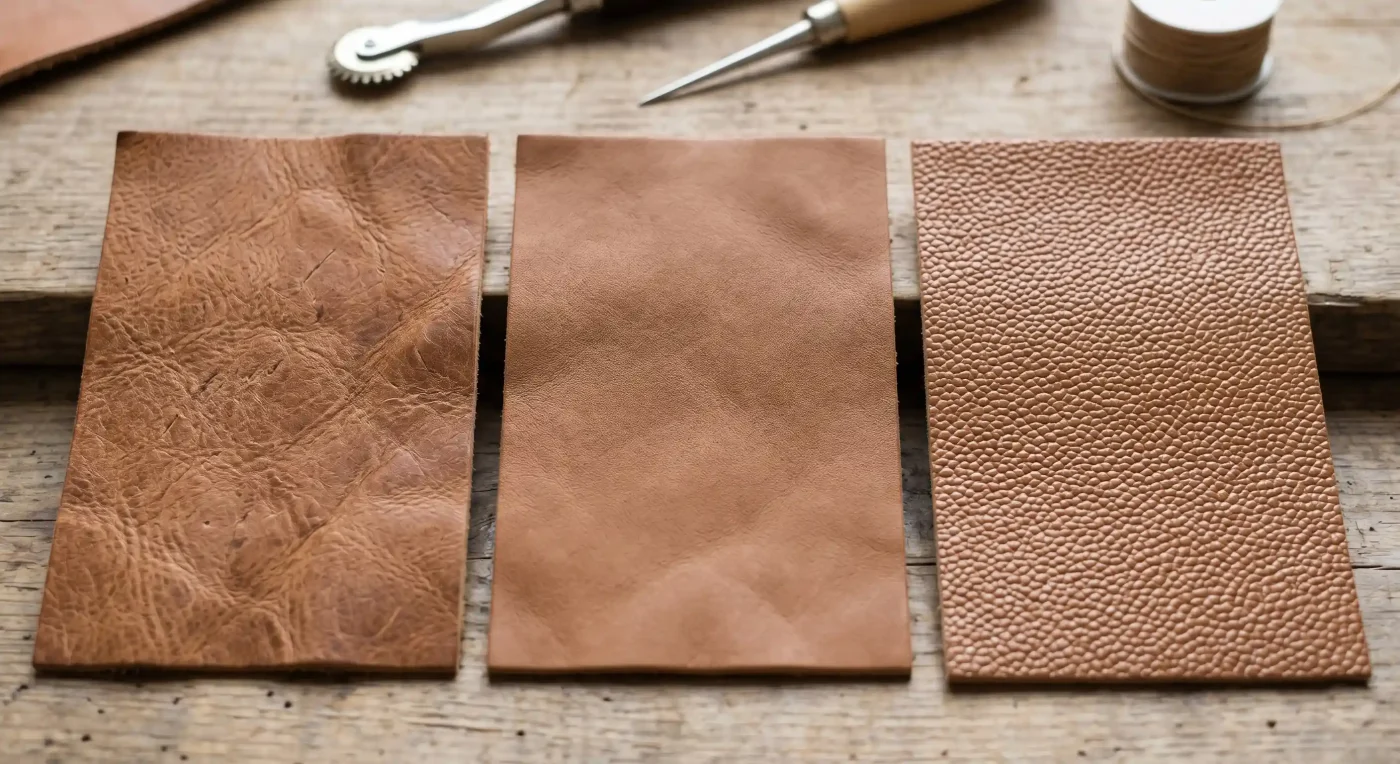
This type of leather comes with all the natural characteristics of the animal intact – from its natural scratches, scars, and even the insect bites. These are not considered defects since these marks make each leather jacket truly unique and distinguishable. With such dense and tightly woven fibers, the full-grain leather is by far the toughest and strongest type of all.
Advantages of full grain leather:
· Quality of developing a rich, beautiful patina that gets even better with time
· Offers resistance against scratches and tears
· Breathable
· Natural insulator
· Durability and longevity
With all these qualities, there is only one drawback. The full grain is the most expensive type of all. It is because only about 10% of hides can qualify for it and can be used without any alteration.
What Is Top Grain Leather? The Refined Alternative
Top-grain leather comes second in terms of quality among all types. This type of leather is also extracted from the topmost layer of the hide just like the full grain one, but there is a catch. That layer is finely buffed in order to get rid of the imperfections. It is aimed to get a uniform texture and a smoother outer shell.
Once the layer is buffed, as a result, the grain appearance and durability are destroyed; hence, this type of leather is more prone to easy wear and tear as it loses inherent strength in the process. However, it becomes softer than full-grain leather, and it also gets easier to dye consistently.
Advantages of top grain leather:
· Smoother surface
· More uniform in its appearance
· Softer, sleeker and more supple
· More affordable alternative to full grain leather
· Easy to clean and maintain
All of the above-mentioned advantages make the top grain leather an ideal choice to be used in garments. It is where uniformity in finish is preferred over natural character.
What Is Corrected Grain Leather? Is It Really A Budget Friendly Alternative
This type of leather comes into existence after the selection process is complete for full grain and top grain leather. Those left-out hides that have too many surface blemishes are processed to make corrected grain leather. Here, the hide surface is heavily sanded or buffed to get rid of the imperfections. Upon stripping off the imperfection, artificial grain is stamped onto the surface. The aim is to create a uniformly “perfect” look through stamping or embossing.
Due to such heavy sanding or buffing, the leather loses all of its natural grain, scratches, scars, and hair follicles. This “produced” leather has no resemblance in touch to either full grain or top grain leather, as it becomes less flexible and supple. It will not develop a patina as it ages.
Advantages of corrected grain leather:
· More repellent to stains
· Cheapest among the full grain and top grain
· Uniform, “flawless” appearance
· Less breathable
· Will crack after usage
Since it is a budget-friendly alternative, the corrected grain leather is commonly used in the mass production of items and accessories related to fashion, including garments, footwear, and furniture.
Full Grain vs. Top Grain vs. Corrected Grain – Quick Comparison
| Feature | Full Grain | Top Grain | Corrected Grain |
| Quality ranking | Tier 1 | Tier 2 | Lowest |
| Surface treatment | 100% natural grain intact | Sanded/buffed to get rid of irregularities | Heavily sanded/buffed. Stamped/embossed with artificial grain |
| Natural markings | Visible | Some removed some visible | Completely removed |
| Durability | Most durable | Less durable than full grain | Can be durable but less supple |
| Patina development | Will develop rich patina with age | Will develop patina with age | No patina at all |
| Softness | Firm initially, softens with wear | Softer and more flexible | Stiffer |
| Price | $$$ | $$ | $ |
| Best for | Luxury jackets & goods | Fashion jackets, everyday wear | Budget fashion, mass production |
Which Leather Should You Choose?
It is all about your priorities:
· Choose full grain if you want your jacket to be durable, want to develop a rich patina as it ages, and you prioritize the natural beauty. Lastly, if you can afford it.
· Choose top grain if you appreciate a smoother surface that comes with a uniform finish. Here, you get good quality that becomes more affordable. The downside is you will be sacrificing some patinam and your jacket won’t last a lifetime.
· Choose corrected grain if your budget is tight, leather is not your priority, and you want something for occasional or light usage. Be aware that it will never develop a patina, will not last long enough, and will never be of heirloom quality.
Frequently Asked Questions
Is top grain leather better than full grain?
No. Full grain is always regarded as a premium choice since it retains the natural characteristics of the hide. Top grain follows as the second choice.
Does corrected grain leather crack?
Yes, it will. It gets stiffer due to the sanding/buffing process. As the natural fibres are disrupted, their surface is to be coated with pigments, resulting in easy cracking.
How to spot the leather quality by looking?
The full grain leather is usually rough with natural flaws on its surface. It does not look as even as the top grain leather. The correct grain has artificial flaws with consistent repetition.
Which leather is best for a jacket?
Full grain leather is the standard for heirloom quality. Top grain is preferred as an affordable alternative. And if you do not mind spending on another piece after some time, corrected grain leather is for you.
Closing Thought – Where to Go Next
To understand leather well and make an informed decision when purchasing it, knowing what the various leather grades and grains entail will be your starting point. However, selecting the right leather grain alone isn’t enough; you have to pay attention to the type of leather itself as well.
If you find this information useful, check out the following comprehensive guide titled: “Men’s Leather Jacket in Lambskin: The Complete Guide — What Nobody Tells You About Quality, Feel & Value” This guide gives you detailed knowledge about lambskin leather, including care tips, styling ideas, and more, making it complementary to the above information.
