
Leather Care & Guides
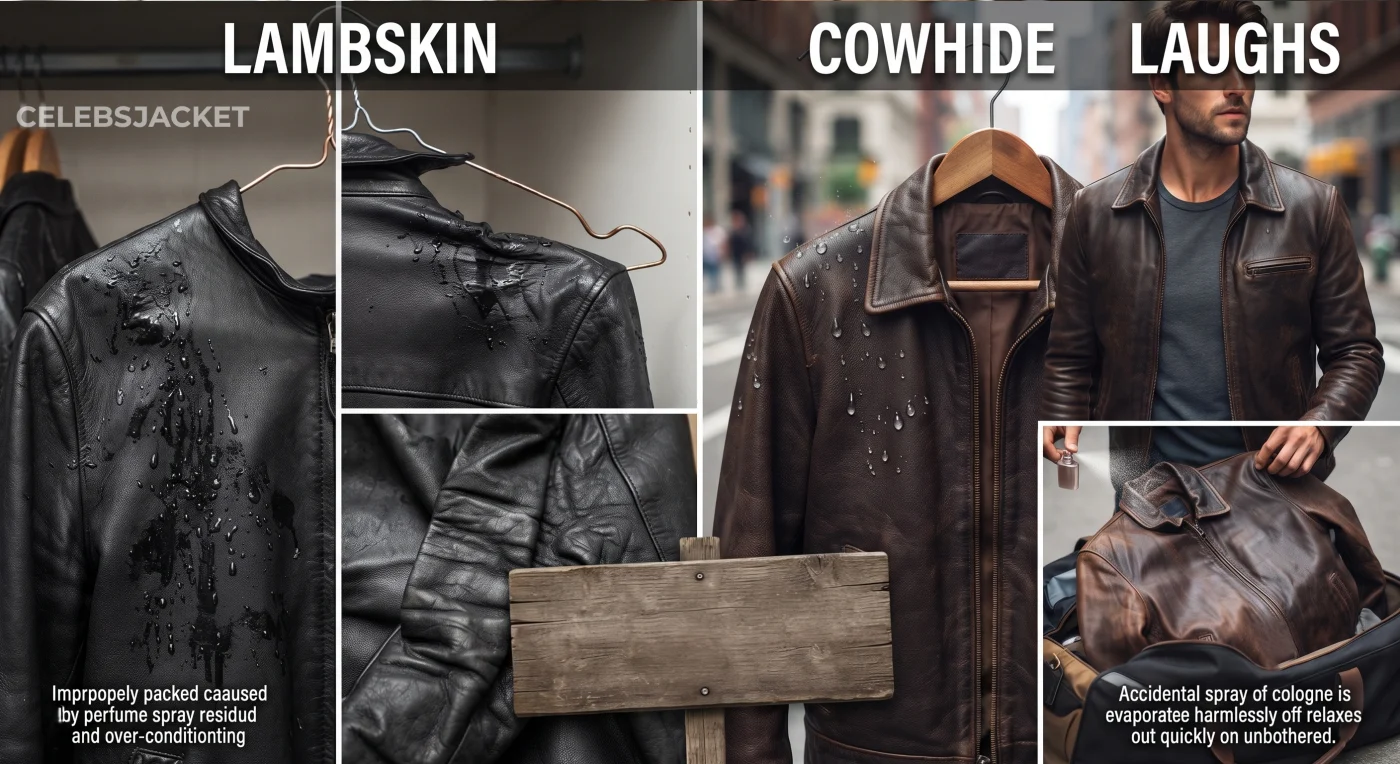
The Worst Thing You Can Do to a Lambskin Jacket (And How Cowhide Laughs at It)
Jul
A top of the line men’s leather jacket made out of lambskin is a gorgeous thing to behold—it feels like butter on your skin, its lightness making you feel like you’re not even wearing a jacket at all. The first time you put it on you’re hooked. The snag is, sometimes that luxurious feeling can go right out the window—the thought of a bit of rain, a crowded room, or even just a dodgy hanger hanging from a hook can start to keep you up at night.
Unlike tougher leathers, lambskin needs a bit more TLC to keep its finish looking its absolute best. Things you do on a daily basis might not seem like a big deal, but over time they can leave nasty marks, stretch the leather or cut its lifespan down to size. Which is why a lot of guys find themselves hesitating before reaching for their jacket, and aren’t wearing it as often as they’d like to.
On the other hand, a cowhide jacket is cut from completely different cloth. It’s a tougher, more resilient leather that can handle all the normal wear and tear you’d expect from a jacket that’s getting regular use. Of course it still needs to be looked after, but it’s a lot more forgiving than lambskin.
In this guide we’re going to cover the five most common mistakes people make that end up damaging their lambskin jacket—and explain why cowhide is the far more practical choice for anyone who wants a leather jacket they can wear every day without any worries.
In this guide, we’ll cover the five most common mistakes that damage lambskin and explain why cowhide remains the practical choice for people who want a leather jacket they can confidently wear every day.
The 5 Killers of Lambskin
Killer #1 – Rain and Humidity
Lambskin is super absorbent. It sucks in water like a sponge, and if you get caught in the rain without a decent jacket to back it up, your leather’s going to be cursing you for days. Don’t just hang it on the radiator either—that’ll only dry the leather out and warp its beautiful shape. Hang it somewhere it can air dry naturally, away from direct heat.
Killer #2 – Thin Hangers
Thin wire hangers or flimsy plastic ones are a big mistake when storing a lambskin jacket. The weight of the leather gradually stretches the shoulders, leaving permanent creases that are difficult to remove. A wide, padded, or wooden hanger will support the jacket properly and help it keep its original shape.
Killer #3 – Folding and Crushing
Unlike tougher leathers, lambskin doesn’t recover well from deep folds or heavy pressure. Packing it tightly into luggage can leave lasting creases. Whenever possible, use a garment bag while travelling and hang the jacket up once you reach your destination.
Killer #4 – Perfume and Alcohol Sprays
Perfume, aftershave, and alcohol-based sprays can damage the delicate finish of lambskin. Repeated exposure dries the leather, making it brittle over time. Apply fragrances to your skin first, let them dry completely, and only then put on your jacket.
Killer #5 – Over-Conditioning
Leather conditioner helps keep lambskin soft and supple, but too much can oversaturate the leather and cause it to lose structure. A light application every now and then is more than enough to keep it looking healthy.
How Cowhide Laughs at Each Abuse
Compared to lambskin, a cowhide jacket is far more relaxed when it comes to everyday wear and tear. A little rain or humidity is unlikely to leave lasting damage as long as you dry it properly afterwards. Thanks to its dense fibre structure, cowhide also holds its shape much better on a sturdy hanger, reducing the chances of stretched shoulders or sagging.
Cowhide is equally forgiving during travel. Minor folds or pressure marks from packing often disappear after the jacket has been hung up for a while. While it’s still best to avoid spraying cologne or alcohol-based products directly onto the leather, cowhide is generally more resistant to accidental exposure than lambskin.
Even if you accidentally apply a little too much conditioner, cowhide is much less likely to become overly soft or lose its structure. Although moderation is still recommended, its durability makes it a favourite for anyone looking for a leather jacket that stands up to everyday use.
Can You Fix a Ruined Lambskin Jacket?
Sometimes you can, but the outcome depends entirely on the type and severity of the damage. A skilled leather specialist may be able to improve light scuffs or surface marks, but more serious problems are often much harder to repair. Water stains can become permanent, while stretched leather or frayed edges usually cannot be restored to their original condition.
Professional leather repairs can also be expensive, particularly for premium jackets. Even successful repairs rarely make the leather look brand new again. That’s why prevention is always the smarter option. Proper storage, careful handling, and regular maintenance will do far more to preserve a lambskin jacket than trying to fix damage after it happens.
The Bottom Line – Buy Cowhide If You Want to Wear Your Jacket
Both lambskin and cowhide have their place, but they suit different lifestyles. If you appreciate an incredibly soft feel and don’t mind giving your jacket extra care, lambskin delivers a luxurious experience. However, if you want a men’s leather jacket that can handle frequent wear with less maintenance, cowhide is the more practical choice.
Its durable construction, excellent resistance to everyday wear, and the beautiful patina it develops over time make cowhide ideal for people who actually wear their jackets rather than leaving them in the wardrobe. It becomes more attractive with age instead of demanding constant attention.
Conclusion
If you want a leather jacket that can confidently handle daily life with minimal fuss, cowhide is hard to beat. While lambskin offers unmatched softness and luxury, it also requires significantly more care to maintain its appearance. Choosing between the two ultimately depends on how you plan to wear your jacket. If you’re still comparing how both leathers change over time, read our guide on The 5-Year Patina Test: Cowhide vs. Lambskin – Which Leather Actually Ages Better? to see which leather truly stands the test of time.
