
Guides
How to Store Your Leather Jacket – Do’s and Don’ts for Every Season
Jul
The Importance of Proper Storage
Leather jackets tend to be stored for long periods of time without being used – but simply hanging in the wardrobe is not enough. You might be surprised to know that proper storage can significantly affect both the appearance and the condition of your garment when it is ready to be used again after a season.
Unfavorable conditions can make your jacket wrinkled, smelly, out-of-shape, moldy, or dry and stiff. What is even more frustrating is the fact that the majority of these issues do not arise immediately. Instead, they appear gradually while your leather jacket lies unused, which makes them hard to notice until you try to wear it once more.
Fortunately, you do not need special products and elaborate procedures to protect your jacket. Only several steps to follow before storing your jacket properly will save the appearance and comfort for many years.
The best period of protecting your jacket is not the moment when you are about to use it from the storage – the time to take care of your leather garment comes much earlier.
Five-Minute Prep for Storing Your Leather Jacket
Leather jackets require care from the moment of purchase and prior to placing them into storage. Spending just five minutes preparing your leather garment will go far in helping avoid any problems with odors, creasing, and undue wear and tear.
A Quick Storage Prep Checklist
✔ Brush off dust and particles.
A soft, dry microfiber cloth should be used to brush off any dust or particles that may get embedded into the leather.
✔ Ensure the jacket is completely dry.
Do not store your leather jacket immediately following exposure to rain or excessive sweat. Any moisture may result in odor or mildew developing in storage.
✔ Clear out all pockets.
Small things such as coins, receipts, and keys can cause stretching or even marks while stored in the jacket.
✔ Zip it up or button it up.
It’s essential to close your jacket to preserve its natural shape as it hangs on the hook.
✔ Apply a conditioner only if the leather is dry.
After washing your jacket and noticing that it looks a bit hard and not shiny, applying a leather conditioner before putting it away will do well. It’s unnecessary if the leather is soft and flexible.
It is fair enough to say that taking this five-minute procedure is the key to giving your jacket a good rest for a couple of months.
Hanging a Leather Jacket Correctly
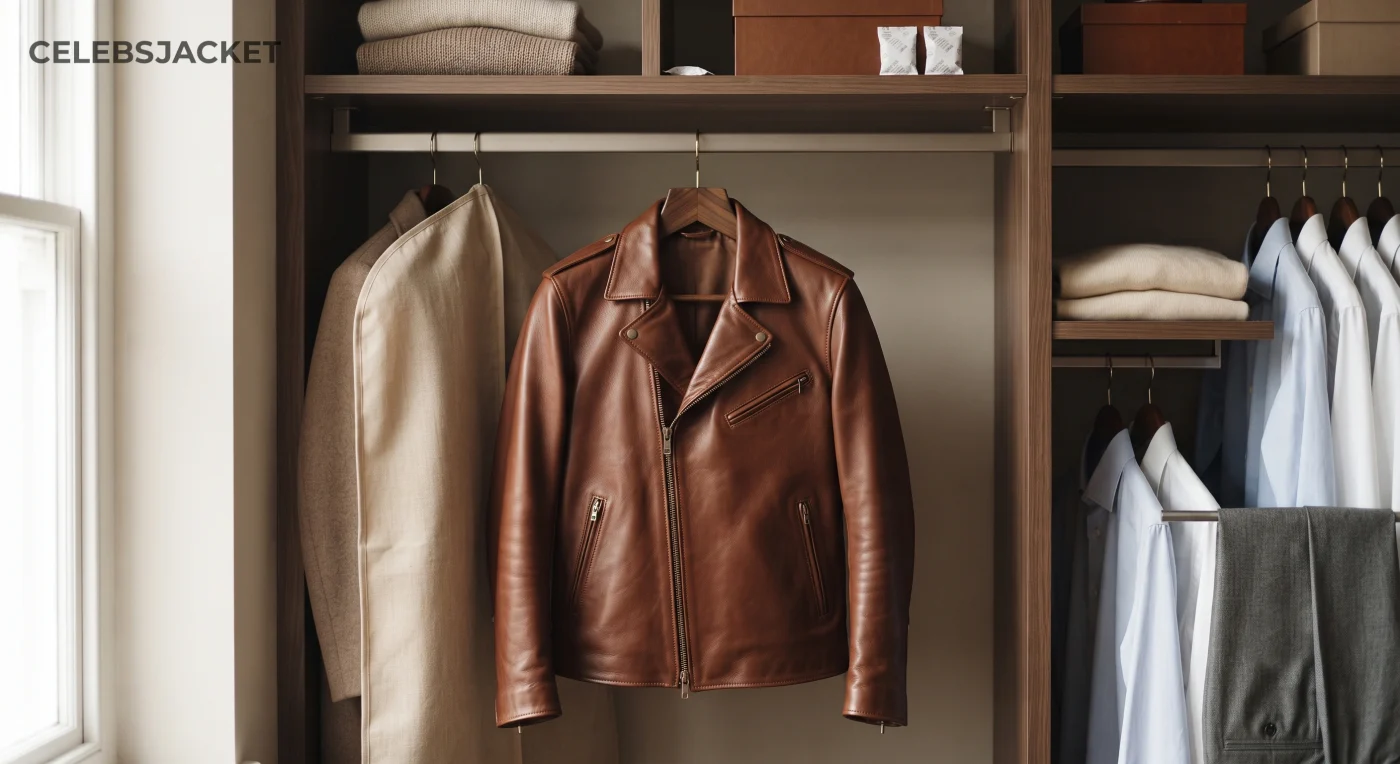
While it’s not only for keeping the leather jacket from falling on the ground, the hanger serves the purpose of supporting the shape of the jacket throughout the entire period when it is stored. Choosing the right hanger is crucial since otherwise, the shape of the jacket will be distorted, the shoulders might get stretched and even some creases can appear permanently.
The ideal hanger is either made of wood, wide or contoured to allow the leather jacket to take the natural shape, without the pressure points which can make the shoulders look lumpy.
In contrast to that, thin wire or plastic hangers have small areas where the weight of the jacket is concentrated.
| Hanger Type | Should You Use It? | Why? |
| Widely padded hanger | ✅ Yes | Provides shoulder support and helps maintain the shape of the coat. |
| Contoured wood hanger | ✅ Yes | Provides even weight distribution and is good at providing support. |
| Narrow Plastic Hanger | ⚠ Sometimes | Suitable for short-term use, but not recommended for seasonal use. |
| Wires hanger | ❌ No | May cause dents in the shoulders and put stress on the leather material. |
A good hanger is not only an accessory but also part of the care routine for your leather jacket. Taking care of the shoulder area properly now will save you from possible shape issues later.
Storage Tips You’re Getting Wrong (And What To Do Instead)
Some of the ways to preserve your leather jacket involve stopping things from happening rather than adding anything else into the mix. Here are some easy switches that will help improve the appearance of your jacket next season.
| ❌ Don’t | ✅ Do Instead |
| Fold up the jacket if it is meant to be stored for an extended period of time. | Hang it on a broad, padded, or contoured hanger in order to preserve its shape. |
| Store it inside a plastic garment bag. | Choose a bag made of cotton which breathes and allows airflow. |
| Expose it to sunlight or place it close to a radiator. | Store it in a cool, dry wardrobe free of heat sources and ultraviolet light. |
| Store the jacket when it is wet. | Allow it to dry before you store it. |
| Crowd it among other heavy jackets. | Give sufficient space for breathing. |
| Neglect it for months. | Check it for any moisture and mold. |
Little blunders in storing the jacket will not be easily recognized since the results of this will only be felt slowly. It is only when there are already wrinkles, unpleasant odors, and rigidity that the negative impact of your storage blunders will be felt after several weeks or months.
Storing leather jackets is all about preventing blunders that will eventually lead to your jacket becoming damaged.
Each Season Brings a New Challenge to Your Leather Jacket
No universal storage system exists for every season of the year. Depending on the climate conditions (temperature, humidity), and how actively you wear your wardrobe, your leather jacket will be exposed to various risks during each season. Thus, taking into account some seasonal peculiarities can save your leather jacket from degrading.
Spring: Refresh Your Leather Jacket
Since your leather jacket has been used intensively during winter months, it requires a bit of cleaning at the beginning of each spring season. Remove any dust from your jacket with the help of soft microfiber and look for possible creasing and loose stitches. The clean state of your jacket will help in safe long-term storage.
Summer: Take Care of Humidity
Though summer is usually not harsh for leather due to the high temperatures, humidity should be your main concern during this season. Stored in an enclosed wardrobe, your leather jacket might absorb moisture and start smelling like old clothes and even mildew. Try to store your jacket in a cool, ventilated place, and in case of humidity, place silica gel packets near it.
Autumn: Time to Break Out the Jacket
As the weather gets a little cooler, make sure you pull out your jacket ahead of time. See if it keeps its shape, is still soft and smells good. The more you look at it now, the more time you will have to address any concerns before winter hits.
Winter: Don’t Expose to Dry Heat
Despite being cold outside, the indoor environment might actually make leather dry out. Keep your jacket away from radiators, heaters, and heating ducts. Only use the leather conditioner if your jacket starts to feel dry and lose its softness. Unlike a regular calendar, leather changes based on its surroundings. Being aware of the seasonal shifts in humidity, air flow, and temperature makes taking care of your leather jacket very easy
Where You Store It Is More Important Than What You Store It In
Picking out an appropriate garment bag is crucial, yet it is not enough for long-term preservation of your leather jacket. No matter how convenient the bag is, no protection can save your jacket from negative effects of humid or overheated surroundings.
The place where you keep the jacket has to be cool, dry, and ventilated. Wardrobes, which tend to hold a lot of humidity, receive sunlight or are near heating systems, can negatively impact leather in terms of stiffness, discoloration, or a musty smell.
For the period of months of storage, avoid packing your jacket among other winter clothes as leather likes some space and needs to breathe.
Simple Habits Will Do the Job
Proper storing of a leather jacket is not related to purchasing additional accessories or spending a lot of time performing complex procedures. It is more about creating favorable conditions for storing beforehand, while storing and after storing.
Here are the main points you should keep in mind, which will make you better than most leather jacket owners:
- Prepare your jacket before storing by removing all dust from it and making sure that it is completely dry.
- Use a broad hanger to preserve its natural shape.
- Store your jacket in a well-ventilated, dry and cool place, instead of a stuffy one.
- Be flexible and adapt to the season changes; pay special attention to summer humidity and winter dryness.
- Visit your jacket from time to time instead of neglecting it for several months.
These habits will cost you a couple of minutes, yet they will save your jacket from wrinkles, unpleasant odor, mold and unnecessary wearing.
Proper storage is just a portion of good leather care practices. If you want your jacket to be in good shape for many years ahead, you need to be aware of not only proper storage methods but also proper ways of cleaning and conditioning it as well. Learn all about leather care from our guide called “How to Clean a Leather Jacket at Home – The Complete Step-by-Step Guide.”
