
Leather Care & Guides
Cowhide vs Lambskin Leather – Which Jacket Handles Rain Better?
Jul
Rain Test – Which Leather Survives a Downpour: Cowhide or Lambskin?
You’re half way through your day when the rain just starts coming down in buckets entirely – your first thought probably isn’t “oh no Im going to get soaked” – its about getting to your men’s leather jacket first to maybe save it from the rain. Will a few minutes in the rain just ruin the leather or can it dry off without too much damage ?
Not all leather is the same when it comes to dealing with water – some jackets will shrug off a bit of rain without a hiccup, while others will suck up water like a sponge and need extra TLC afterwards. Knowing the differences before you go out and buy that new leather jacket can save you a small fortune in repairs and disappointment down the line. In this test we threw one of those cowhide jackets and a lambskin jacket out into the rain and watched to see how each of them handled it. You’ll see which leather is better at withstanding the every day weather, how to get your real leather jacket looking good as new again after it gets wet , and which one is the smarter long term buy. If durability matters as much as how good it looks then this test will have you choosing the genuine leather jacket that fits in with your way of life in no time
The Experiment – Water Droplets on Both Leathers
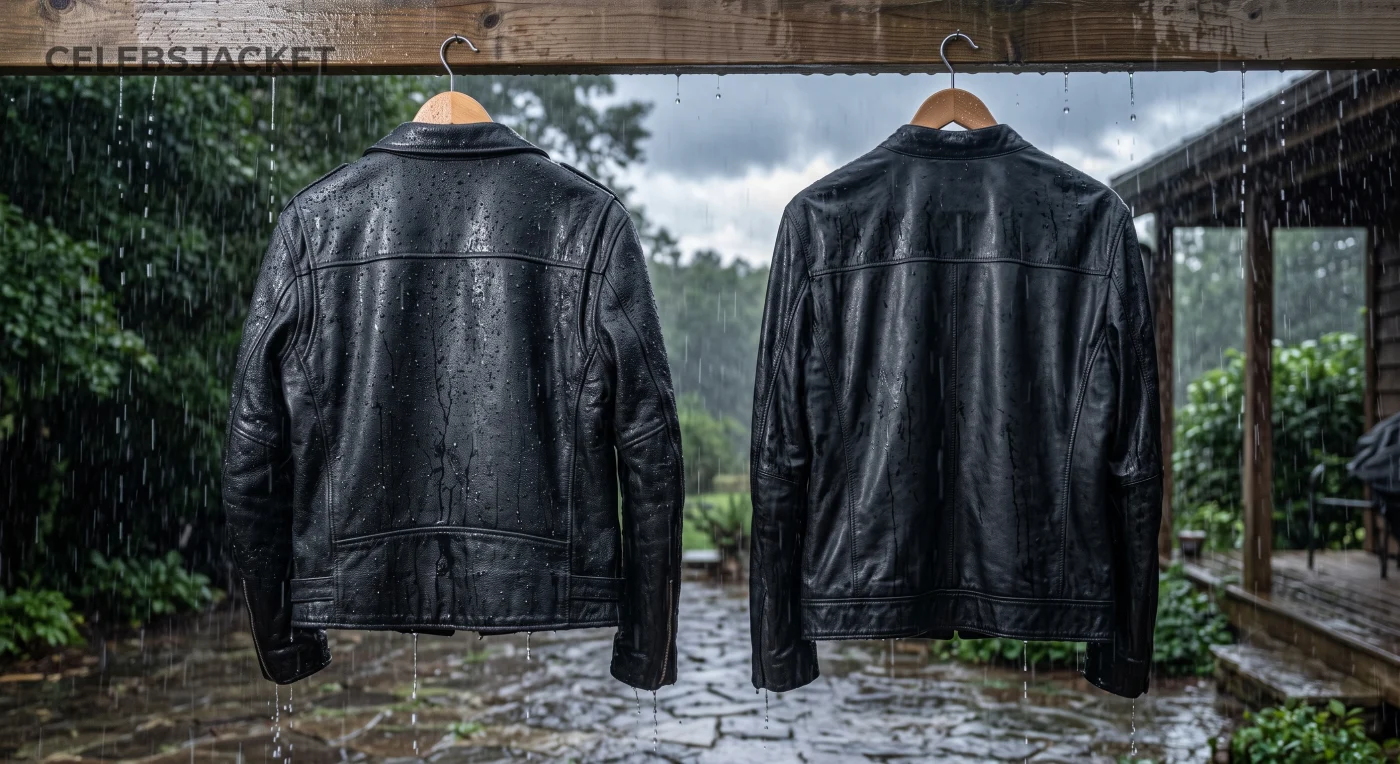
To get a level playing field, both the cowhide jacket and the lambskin jacket were subjected to the exact same amount of water under conditions that were a perfect mirror to each other. We let each jacket air dry for the same length of time before putting them under the microscope to see how well they absorbed water, how they looked after getting wet, and whether the leather had retained its shape. By doing this side-by-side test we get a clear picture of how each real leather jacket copes in real world rain conditions.
Cowhide’s Reaction
During the test, water droplets at first began to form beads on the surface of the cowhide jacket before slowly trickling off. You see the dense grain structure of the leather really helps slow down the absorption of moisture – that means a cowhide jacket will actually hang in there a bit better in light rain than some of the softer alternatives out there. After drying out, the real leather jacket basically retained its shape with hardly any noticeable wear and tear. Now, it is worth pointing out that while untreated cowhide isn’t exactly waterproof – throw enough heavy rain at it and eventually it will start to show some wear – it does generally do a better job of keeping out the weather if you’re just out and about on a normal day.
Lambskin’s Reaction
During the test, the lambskin jacket soaked up water a fair bit quicker than cowhide did because its softer, finer fibers basically sopped it right up. And once the water got to work, the leather went a bit dark really quickly – which makes drying the thing as soon as you can especially important – or you might be left with ugly water marks or a slightly changed shape. But with a bit of TLC, a real leather jacket made from lambskin can still look great – it’s just that it does need a bit more attention after a rain shower than a cowhide jacket because, let’s face it, its nature is a mite more delicate.
Why Cowhide Repels Water (The Science of Dense Fibers)
The main reason is down to the way the leather’s made – the cowhide jacket gets its water-repelling powers from a tightly packed matrix of collagen fibres. These pack a bit of a punch in slowing down moisture from seeping in, which makes them a lot more durable in light drizzle, so you can get by with doing a bit of casual repair work rather than a full on re-stitch. In contrast, lambskin jackets have a load of finer, softer fibres, which means water just runs right through them – so getting a good clean and conditioning in right away is a good idea, to stop them getting all soggy and ruined. just to be clear though, neither of these leathers is going to keep the rain out all day and in heavy downpours they’re both going to be a bit of a write-off. Still, for everyday wear, cowhide’s probably the safer bet when it comes to a men’s leather jacket.
What to Do If Your Jacket Gets Soaked
If your new men’s leather jacket ends up getting soaked, just remember – no hairdryer or hot iron to try & speed things up. That’ll only end in disaster . Instead, take a bit of time to gently blot away any water that’s still clinging to the jacket using a soft cloth – it’s just a little easier that way . Then hang the jacket up on a wide shoulder hanger in a well ventilated room , let it be and let it dry at its own pace. Once it’s completely dry don’t forget to give it a good conditioning just to make sure the leather stays in top nick. By doing this you’ll be able to keep your cowhide jacket or lambskin jacket looking its best even after a bit of bad weather.
Salvaging a Wet Cowhide Jacket
Now if you do get caught with your cowhide jacket in the rain – don’t panic. Just gently pat off any excess water with a soft towel & then pop it on a wide hanger in a room with a bit of airflow. Once it’s totally bone dry, give it a light dusting with a leather conditioner to get the natural oils flowing & stop it getting all stiff & awkward.
Salvaging a Wet Lambskin Jacket
Get a bunch of water out of it right away – don’t even think about rubbing the skin or you’ll damage it. Stuff the sleeves with some clean towels to keep them looking decent while it dries & let it air dry – keep it away from any heaters or direct sunlight if you want it to look right. And if it’s still got water marks and is out of shape after all that, then it’s probably time to get a professional in to sort it out with a good leather cleaner.
The Verdict – Rain is Cowhide’s Best Friend, Lambskin’s Worst Enemy
Cowhide survives; lambskin suffers.
For most of the time, you’ll probably be better off with a cowhide jacket because it’s a lot more practical for day to day wear in the rain. Cowhide has got a nice dense grain that helps keep the rain out and it holds its shape pretty well after drying out. Lambskin on the other hand is super soft but it’s a bit of a handful in the wet – so if you need something that can take a beating in the rain a men’s leather jacket made from cowhide is probably a safer bet in the long run.
Conclusion
When it comes to handling rain, cowhide clearly has the advantage. Its dense fiber structure helps resist moisture, maintain its shape, and recover better after drying, making it the more practical choice for everyday wear. Lambskin, while exceptionally soft and luxurious, requires more careful maintenance after exposure to water to preserve its appearance and longevity.
Ultimately, the right choice depends on your lifestyle. If your jacket is likely to face unpredictable weather, cowhide offers greater peace of mind. If comfort and a premium feel are your priorities, lambskin remains an excellent option—as long as you’re prepared to give it the extra care it deserves.
Still deciding between the two? Rain resistance is only one part of the story. Discover how both leathers age over time and develop their unique character in our detailed Cowhide vs. Lambskin Leather Patina Test:
