
Guides
Lambskin Leather vs. Goatskin Leather – Which Jacket Lasts Longer?
Jun
If you are looking to invest in a high-quality leather jacket, durability will play an important role in your decision-making process. Of the two most common types of leathers used to create jackets, lambskin and goatskin, there are some clear differences. The question remains whether one offers better longevity than the other. Unfortunately, there are a lot more factors involved. This article highlights all the differences in terms of durability and strength.
Lambskin Leather – Soft, Supple, and Surprisingly Durable
A misconception regarding lambskin is that this material is “delicate.” In reality, although it is unquestionably softer and more lightweight compared to other types of leather, modern tanning technology has increased its durability significantly.
What makes Lambskin distinctive:
Extracted from sheep that is less than 12 months. It leads to a finer and more compact collagen fiber structure
· More lightweight and thin cross-section (0.5 – 0.8 mm) in comparison to goatskin
· Natural breathability properties
· Has a nice patina
Durability: Being highly tear-resistant due to the compact structure of its fibers, lambskin is rather prone to scratches and fragile compared to goatskin due to the thin surface layer. If you take good care of your lambskin jacket (for instance, condition it regularly and protect it from excessive dampness), then a quality lambskin jacket may serve you for about 10 to 25 years.
Ideal for: For everyday wear in the office or for social situations; for men who prefer comfort and luxury over durability.
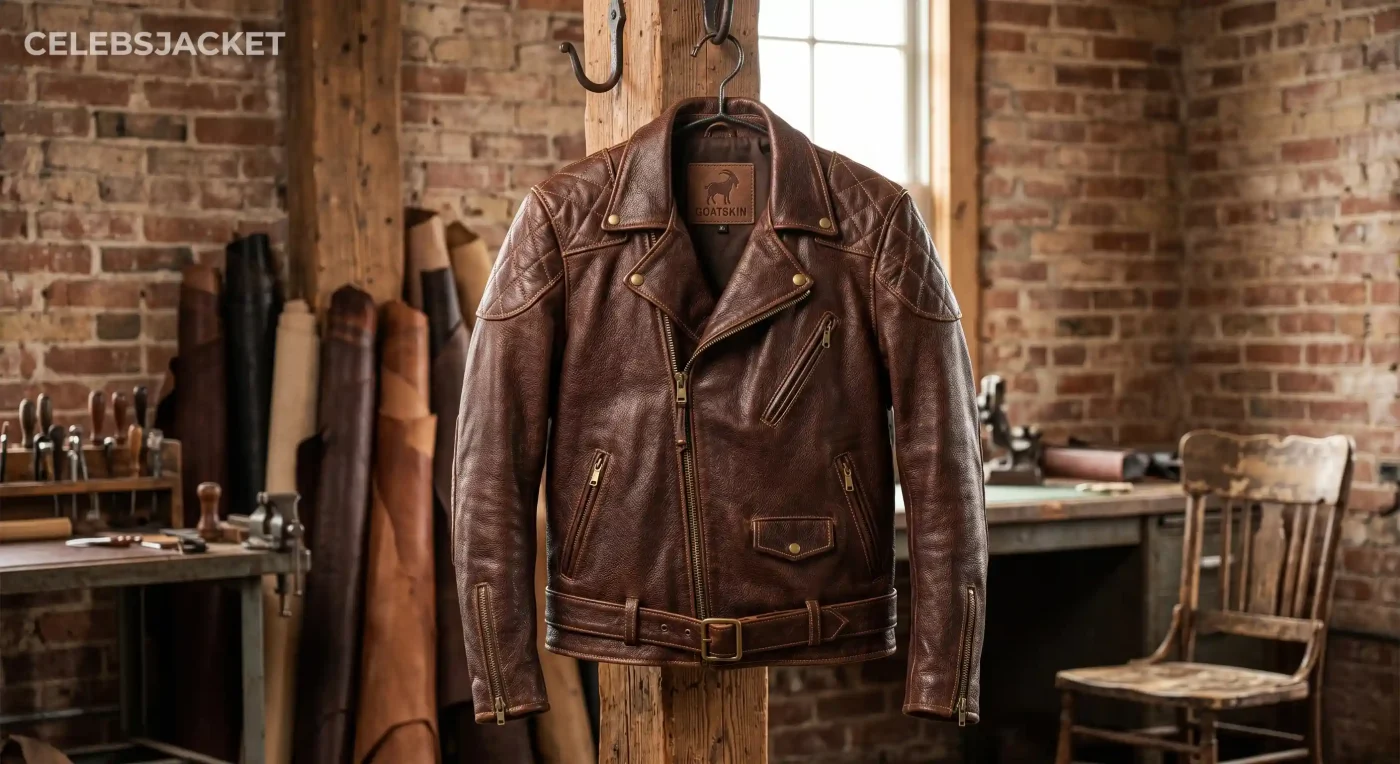
Goatskin Leather – Rugged, Textured, and Built for Endurance
Goatskin is one of the most commonly used leather types. It is favored for its remarkable strength and resilient nature. It also comes inherited with natural ability to resist wearing out.
What makes Goatskin distinctive:
· Extracted from the hides of mature goats, which creates a stronger, sturdier fiber structure
· Thicker fibers (0.6 – 1.0mm) compared to lambskin
· Pebble-like grain surface that is effective at concealing marks
· High lanolin concentration gives goatskin natural repellence against water
Durability: Goatskin is considerably tougher than lambskin when it comes to durability. Not only does its natural grain texture help conceal any minor marks, but its abrasion-resistance also makes it great for jackets you want to wear frequently or while traveling. Properly cared for, a goatskin jacket will last anywhere from 10 to 30 years.
Ideal for: Recommended for: Travel and open-air activities, motorcycling, or anyone looking for a durable, yet stylish, jacket.
| Feature | Lambskin | Goatskin |
| Thickness | 0.5 – 0.8mm | 0.6 – 1.0mm |
| Softness | Soft, supple | Firm, softens with wear |
| Abrasion resistance | Moderate | High |
| Scratch visibility | Visible | Minimally visible (pebbled grain hides them) |
| Water resistance | Low | Moderate (natural lanolin) |
| Patina development | Rich patina over time | Develops character but less dramatic patina |
| Typical lifespan | 10 – 25 years | 10 – 30 years |
| Best for | Fashion, comfort, mild conditions | Travel, outdoor use, rugged wear |
Key takeaway: Both leather types can endure decades with adequate maintenance. Goatskin has better resistance against everyday use, whereas lambskin gives you better comfort and better aesthetics.
Which Leather Should You Choose for Longevity?
The answer depends on your lifestyle:
Choose lambskin If you want to enjoy comfort and luxury while wearing your jacket. It will suit you perfectly in the city, office, and other social gatherings where you want to wear something luxurious and comfortable.
Choose goatskin if you require a jacket which could withstand higher levels of physical activity and could be worn in different environments like traveling or going out on weekends.
The best thing about both these leather types is that they both are durable. Both are very long-lasting; the only difference between them lies in the way that they age. In essence, both are highly long-lasting. It is just the way that they age and endure wear that differs.
Frequently Asked Questions
Is goatskin harder to break in than lambskin?
Yes, goatskin takes some breaking-in but gets softer and adjusts to the shape of your hand over time, whereas lambskin feels soft right out of the box.
Which leather is more breathable?
The lambskin is more breathable, as it is thinner and more porous. The latter contains more lanolin and fibers that make the material denser and less breathable.
Does goatskin develop a patina?
Yes, it can, although this patina is much less spectacular compared to the one lambskin acquires. Its grain and pebbling give it another type of texture.
Which leather is better for motorcycle riding?
Goatskin is definitely a more durable choice, as lambskin will simply not survive the intense rubbing when you slide on it.
Closing Thought – Where to Go Next
Either will be a great choice, depending on your lifestyle, climate, and how you intend to wear the coat. In case you’re still not sure which is right for you, we absolutely suggest checking out our informative guide: “Men’s Leather Jacket in Lambskin: The Complete Guide — What Nobody Tells You About Quality, Feel & Value” This guide contains everything from information about lambskin’s special properties to advice on caring for, styling, and identifying fakes.
